Key Takeaways
- Founded in 1999 by Jay-Z and Dame Dash, Rocawear turned his Roc-A-Fella-era cultural clout into one of hip-hop’s biggest clothing empires, quickly hitting tens of millions in sales and landing in major department stores.
- Pushed by Dame Dash’s aggressive distribution and Jay-Z’s aspirational image, the brand expanded into footwear, accessories, fragrance, and spin-offs like Beanie Sigel’s State Property, becoming a staple of 2000s hip-hop style worn by everyone from Roc-A-Fella artists to Naomi Campbell and Allen Iverson.
- Jay-Z ultimately took full control, sold Rocawear’s IP to Iconix for about $204 million in 2007, later bought back the rights in 2019, and used the playbook it established to fuel a broader billion-dollar empire (Roc Nation, Armand de Brignac, D’usse).
- Rocawear’s legacy laid the blueprint for rapper-led fashion like Kanye West’s Yeezy, Pharrell’s Billionaire Boys Club, and Tyler, The Creator’s Golf Wang.
Jay-Z’s strong business acumen made him a billionaire. From D’usse to Tidal to the legendary 40/40 club, the rap legend has dominated various industries across his legendary career. It all started in 1999 with his clothing brand, Rocawear.
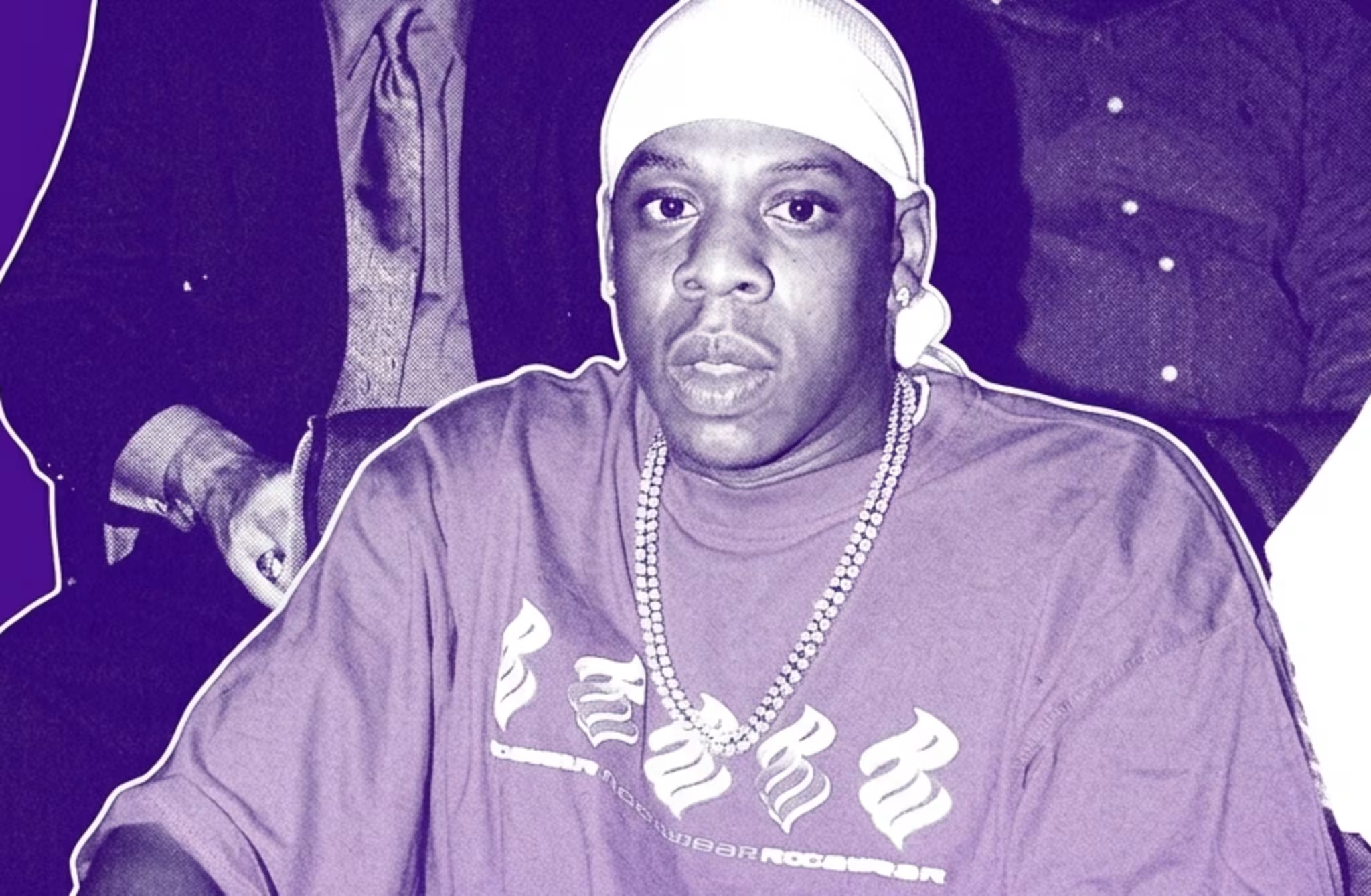
With the help of his then-business partner Dame Dash, Jay-Z built one of the most recognizable clothing brands in hip-hop history. Rocawear translated Jay-Z’s cultural credibility into a multi-million dollar business and its “RW” logo has become everlasting despite the brand now being decades removed from its peak. Rappers running apparel brands is common in the industry today. Who knows if it would have become normalized if Hov had never laid the blueprint?
Ahead of Jay-Z’s trio of Yankee Stadium shows this weekend, we take a look back at the rise and legacy of Rocawear.
From Iceberg Rocker to Brand Founder
Before starting his own brand, Jay-Z was one of the biggest and most consistent supporters of Iceberg. The Italian luxury label’s knits featuring iconic cartoons characters like Mickey Mouse and Snoopy became massively popular within street fashion in the late ‘90s. Jay-Z became the brand’s most famous unofficial ambassador. He had such an impact on its success that he eventually approached the brand to ink an official deal, which Iceberg declined. Rocawear was born. Without Iceberg’s rejection, Rocawear may have never come to be.
The Birth of Rocawear
Three years after his critically-acclaimed debut, Reasonable Doubt, landed in 1996, Jay-Z decided to extend his portfolio beyond music. While it wasn’t the first, labels like Wu-Wear existed years before it, Rocawear was one of the earliest and most visible examples of a hip-hop superstar converting cultural influence into a legitimate apparel business. Within 18 months of its debut, the brand had already grossed $80 million in sales.
Rocawear’s Offerings
Jay-Z and Dame Dash’s brand covered serious ground from the start. Along with a lineup of gear like logo T-shirts, coats, and satin tracksuits, the brand also offered footwear in partnership with Pro-Keds, accessories, and even fragrance. Rocawear wasn't just a vanity project co-signed by a major rapper—it was built to be a clothing empire. To further plant itself into mainstream culture, it even designed virtual gear worn by the character Afro Thunder in the 2000s boxing video game, Ready 2 Rumble. By 2003, the brand had was netting $700 million in annual sales and was sold in major department stores like Macy’s. Along with brands like Sean John and FUBU, Rocawear was at the forefront of the urban market.
How Rocawear Became a Hip-Hop Fashion Staple
Dash pushed hard to get Rocawear into department stores, onto magazine pages, and in music videos, building the kind of retail and editorial presence that turned a new label into a household name. It also didn’t hurt to have Jay-Z wearing it every time he stepped out. His aspirational persona gave the brand a credibility that no ad budget could manufacture, and every time he referenced the line in a verse or wore it on camera, it landed.
Jay-Z and Dame were far from the only Rocawear rockers. The rest of the Roc-A-Fella roster, from Freeway to Beanie Sigel, wore the gear on stage and in videos. NBA’s flyest superstar Allen Iverson was snapped in pieces. The brand even featured supermodels like Naomi Campbell and Victoria Beckham in its editorial campaigns. Rocawear was everywhere and it helped the hip-hop wardrobe infiltrate mainstream fashion.
Rocawear's Spin-Off Label: State Property
Rocawear became so big that it was able to foster an entire spin-off label led by another Roc-A-Fella artist. Beanie Sigel’s State Property, which shared a name with the cult classic film he also starred in, was founded in 2002. The line referenced classic workwear styles like cargo pants and heavy duty canvas jackets. It acted as the perfect balance to Rocawear’s offerings, which were skewing into a more refined territory to match Jay-Z’s “Change Clothes” era of striped button-ups and raw denim.
When Jay-Z Cashed Out
While Jay-Z was the face of Rocawear, Dame Dash was largely the business brains behind the operation. So, it was a bit surprising when Jay-Z took over control of the brand and Roc-A-Fella after the duo’s falling out in 2004. In September 2005, Dame sold back his stake in Rocawear to Jay-Z for $22.5 million. By 2007, Jay-Z sold the rights and intellectual property of Rocawear to Iconix Brand Group for $204 million. He maintained a stake in the company and remained in a creative capacity. The sale converted nearly a decade of brand-building into a nine-figure payday.
Following the Iconix deal, Jay-Z was also rumored to launch a luxury line dubbed the Shawn Carter Collection that would be sold at high-end department stores like Neiman Marcus and Saks. It ultimately never released.
While it remained profitable, still hitting nine-figures in annual sales in 2012, Rocawear’s cool factor gradually wore off in the years that followed the expensive sale. By the 2010s, what was once a status symbol in hip-hop worn by one of its biggest acts had been relegated to sale racks in big box retailers like Macy’s.
While it never quite recovered, Jay-Z did retain the full intellectual property rights to Rocawear for $15 million in 2019 as part of a settlement with Iconix. While it is technically still active, don’t expect Jay-Z to be rocking any new pieces. Maybe you’ll see Kai Cenat in some vintage gear though.
Rocawear's Lasting Impact on Hip-Hop Fashion
When Carter and Dash launched the brand in the ‘90s, the idea of a rapper-owned clothing line competing seriously against established labels was still largely untested. The success Rocawear found throughout the 2000s rewrote what was possible. It helped pave the way for ventures like Kanye West’s Yeezy or Pharrell’s Billionaire Boys Club to be embraced as legitimate ventures, not just flashy money grabs and merch plays. Tyler, the Creator even spoke on Rocawear’s impact on him in an excerpt from Pharrell's book Carbon, Pressure & Time: A Book of Jewels saying, "I probably don’t mirror [Jay-Z] like most people would think, at base-level, but what he did with Rocawear and these things, I was studying it as a kid. While I got Golf Wang going 10 years later, it’s worth this and that, if I decided to sell it. I’m great. I did not like that shit, but I studied what they did, and now, because of that, I learned that from him.”
Hip-hop’s uniform had always been central to its identity. But these rappers were in large part giving free promo to brands and not seeing any of the monetary benefits. Rocawear demonstrated that the people who shaped that identity could also profit from it on their own terms. Hip-hop fashion wasn't a niche market or a passing trend. It was a category, and the artists who built it were qualified to run it.
Jay-Z's Net Worth: $2.8 Billion
Rocawear was only the first chapter. The same competitive instinct that built the clothing line pushed Jay-Z into a string of ventures that led him to achieve billionaire status in 2019. As of July 10, 2026 Forbes put his net worth at $2.8 billion, a figure built across music, sports management, spirits, and entertainment.
Roc Nation, the entertainment company he founded in 2008, expanded his reach into artist management, sports representation, and live events. His champagne brand, Armand de Brignac, gave him a foothold in luxury goods; his stake in D'Ussé cognac added another. Like he rapped back in 2005 on the Diamonds From Sierra Leone (Remix),” "I'm not a businessman, I'm a business, man."






