Image via Complex Original
The term "influencer" sure gets thrown around a lot more than it should. It seems these days, anyone with a lot of social media followers or a Tumblr with a decent number of reblogs gets that label. But really, if you look at how men's style has evolved the past few centuries, it's very clear where certain ways of dressing and trends came from. From groundbreaking designers, unsung heroes of style, and the dudes who just championed a trend first, there are numerous people who deserve recognition for their contributions to the world of menswear. Here are 30 Actual Men's Style Influencers, whose lasting legacy is visible in the way we still get dressed today.
RELATED: The Style Influencers You Should Follow on Instagram
RELATED: The 50 Greatest Menswear Brands of All Time
WWII Veterans
Visible Influence: Chinos
World War II vets brought khaki pants from the front lines to college campuses. Thanks to the G.I. Bill, many young men came home from the war and went off to college. The twill trousers they wore on the field looked nice enough for the academic world, so they decided to start wearing them on campus. Soon enough, khaki pants became an acceptable casual staple for guys everywhere.
Christian Audigier
Visible Influence: Tattoo-Inspired Shirts, Trucker Hats, Gaudy Clothes
Even though most people look at his designs with a certain degree of revulsion, Audigier's effect on men's style can be seen in the dark era of style in the mid-2000s. Before he made his fortune appropriating tattoo culture and the artwork of Don Ed Hardy, he was making money by getting guys like Ashton Kutcher to wear trucker hats with "Von Dutch" emblazoned on them. The fact that he could charge hundreds of dollars for the gear started a trend of overpriced crap that led people away from gaudy brands and towards minimal, logo-free clothing.
Ivy League Students
Visible Influence: Blue Blazers, Cricket Sweaters, Side Parts
Blue blazers, critter pants, cricket sweaters with the colors around the V-neck... you can thank Ivy League students for making those the de facto style staples of blue-blooded Americans. Presidents like JFK pushed this style further into the mainstream, while books like Take Ivy turned it into the stuff of menswear nostalgia. You can thank the Japanese for subverting the style. In the mid-'60s, a group of kids known as the Miyuki-Zoku appropriated the look of oxford cloth button-downs, slim sportcoats, and madras plaid. Instead of studying, they spent most of their time loitering around the shopping district of Ginza.
James Jebbia
Visible Influence: Supreme, Limited-Edition Streetwear, Collaborations, Artist Collaborations
What started as a skate brand really set the model for what a good "streetwear" brand could become. Limited distribution, very, very controlled flow of the product, and a "if you don't get it, you don't get it" sort of mentality propelled Supreme into what it is today. Many brands have tried to emulate them, but no other company really defines East Coast skateboarding culture quite like Supreme. Throw in collaborations with artists like Damien Hirst and Ramellzee, and current brand evangelists ranging from Tyler, The Creator to Glenn O'Brien, and it's evident that Supreme is one of the few brands that's been able to sustain itself solely on the currency of cool.
Baseball Players
Visible Influence: Baseball Caps, Baseball Jerseys
No matter if it's a snapback or a fitted, it's still a baseball cap. You can thank Alexander Cartwright, the OG owner of the New York Knickerbockers (move over, James Dolan) for the first baseball uniform. However, the first team to wear the baseball cap as we know it today would be the Brooklyn Excelsiors circa 1860. You can thank the Yankees for classing up the joint with the first pinstripes on their uniforms, while the Cleveland Indians were the first to put numbers on their jerseys in 1916. Before Jay-Z, The Great Bambino was out there making Yankee caps famous.
Kanye West
Visible Influence: Rappers Wearing High-Fashion, Pieces He Wears Fetching Higher Prices
Kanye West wasn't the first rapper to sit front row at a fashion show (guys like Tupac walked in Versace shows in the '90s), but what he did accomplish was bridging the gap between high-fashion and hip-hop. He learned the ins and outs of the industry by interning at spots like Fendi, and forged organic relationships with heavy-hitters like Anna Wintour, Marc Jacobs, and Riccardo Tisci, whom he enlisted to creatively direct parts of the Watch the Throne tour and album art. Now, anything Kanye wears, from a H&M collaboration to Alain Mikli-inspired shutter shades, to a women's Céline top, becomes an instant trend, not to mention automatically fetches a hefty price on sites like eBay.
Ozwald Boateng
Visible Influence: Bright Tailored Clothing
One of the greatest black fashion designers of all time, Ozwald Boateng revitalized the world of British tailoring, and took it to the world of high fashion. He was also one of the early adopters of infusing bright colors and shirting into the world of menswear, and his success with is own line led to a stint as Givenchy's creative director from 2004-2007, where he shot a well-needed dose of modernity into the label's men's collections.
Prisoners
Visible Influence: Sagging Pants, Shoes Without Laces, Chore Jackets
Sagging pants is supposedly a practice that was adopted from prison culture, where belts weren't given out because they could be used as weapons, and sizes weren't always plentiful. Vans even issued California inmates special shoes with velco closure, and dubbed them the Prison Issues. Cool Hand Luke also showed inmate style at its best, as Paul Newman showed how rad a chore jacket and chambray shirt could look. Besides, the institution also taught us that black and white horizontal stripes (and later on, blaze orange) could look cool, and inspired everyone from Hamburglar to The Beagle Boys from DuckTales.
Riccardo Tisci
Visible Influence: Luxury Graphic Tees, Hoodies, and Sweatshirts, Animal Graphics, Religious Imagery, High-End Leather Clothing
Today's prevalent high-end streetwear aesthetic was predicted by Riccardo Tisci as early as 2009. While contemporaries like Rick Owens, Alexandre Plokhov, and other dark designers had championed a gothic-inspired silhouette for a while, Tisci's rottweiler graphic tees and dark clothes came out at just the right time. Rappers like Kanye West flocked to the designs, and now numerous other brands are trying to piggyback off of that success.
Leon Leonwood Bean
Visible Influence: Bean Boots, Backpacks, Outdoor Style
When it comes to outdoor style, L.L. Bean dressed countless American men. While his single-biggest contribution to menswear is the Bean Boot (generically known as the "duck boot" to peasants), a silhouette that gets whipped out every winter across the Eastern Seaboard, his designs also influenced a lot of the modern outdoor-inspired workwear and outerwear brands around today. And every other kid had one of those monogrammed backpacks growing up, while no self-respecting prep doesn't have at least one boat-and-tote bag.
Hedi Slimane
Visible Influence: Skinny Everything
Hedi Slimane is the designer who slimmed down menswear. From 1996-2000, Slimane oversaw the men's collections at Yves Saint Laurent, where he began to work towards the skinny silhouette he'd become known for. His next gig as the creative director of Dior Homme is what got him noticed. He designed Dior Homme's 19cm and 21cm jeans, which fit in a considerably skinny way for the time. The rest of the clothes followed suit. Currently, he's known as the guy who rebranded Yves Saint Laurent to just "Saint Laurent Paris," bringing his fashion career full circle.
French Sailors
Visible Influence: Breton Stripe Shirts
The Breton stripe shirt is one of the French Navy's lasting contributions to men's style. While French fashion houses put out amazing collections each season, and brands like A.P.C., BWGH, and Pigalle make the kind of stuff that hypebeasts and style-conscious guys drool over, this basic shirt has essentially made itself part of the French uniform. Tradtionally worn underneath naval uniforms, the contrasting horizontal stripes were originally meant to make sailors more visible in the water if they fell overboard. Now, they just make a decidedly French fashion statement.
Gordon Gekko
Visible Influence: 1980s "Power Suits"
The man with a phone that would make Zack Morris jealous exemplified the "power suit" of the '80s. If time was money, this guy wouldn't spare any for you. He was the archetype of everything that was wrong with the "me generation," and his clothes weren't meant to make himself look better, but make himself look better than you. Still, men wanted to emulate his style, and lots of financial douches still cite Gekko as an influence.
Gold Miners
Visible Influence: Workwear, Denim-on-Denim
These West Coasters embodied the workwear aesthetic that a lot of vintage clothing nerds and fans of brands like Engineered Garments and Post O'Alls strive for today. Favoring utility over fashion, and quality above all, gold miners with limited living space and even more limited funds were the original champions of the saying "buy less, but buy better."
Thom Browne
Visible Influence: Shrunken Suits
If Hedi Slimane ushered in the skinny jean, Thom Browne took that aesthetic to men's tailoring. Messing with proportion, Browne's shrunken silhouette debuted in 2001, nudging the world of men's fashion towards slimmer fits. Five years later, Brooks Brothers enlisted him to design a line for them, taking his signature fits but translating it for the 200-year-old brand, a move that signified his place as not just a fashion designer, but a menswear pioneer.
Lumberjacks
Visible Influence: Flannel, Boots, Beards, Beanies
Flannel anyone? From the Brawny man to Paul Bunyan, these tree-choppers set one of the most famous archetypes for masculine style. So much so, that when city slickers started growing out their beards, buying American-made brands, and cuffing their selvedge denim, a look known as the "urban lumberjack" was born.
Nigo
Visible Influence: A Bathing Ape, Full-Zip Hoodies, Reinterpreted Camouflage
The prominence of streetwear in the mid-2000s and the rise of Pharrell as a style icon can be attributed to Nigo. He learned the trade from fellow legend Hiroshi Fujiwara, and he made all-over print hoodies that zip up to cover your face a viable wardrobe option. Think of the other brands that followed in A Bathing Ape's wake: Kidrobot, Billionaire Boys Club, and countless others that were clearly inspired by the house that Nigo built. While BAPE's style has definitely changed over the years, their heyday is remembered fondly by streetwear heads everywhere.
The U.S. Navy
Visible Influence: Melton Wool Peacoats, CPO Shirts
The U.S. Navy commissioned one of the most versatile pieces of menswear ever. The "pea coat" is mentioned as early as the 1720s, and takes its name from "pilot cloth," a heavy material that these jackets used to be made from. They were then called "p-jackets" for short before "p-coat." Today's current iteration has been made by companies like Schott for centuries, who manufactured standard issue peacoats in WWII. The melton wool CPO Shirt also comes from the U.S. Navy, these heavy overshirts derive their name from the Chief Petty Officers who wore them.
Calvin Klein
Visible Influence: Branded Underwear
Calvin Klein turned underwear into a fashion statement. Before he aimed to make men aware of their skivvies, whitey-tighties were boring and pretty much the norm. He changed the game by making them a stylish item, and guys haven't stopped flashing the tops of their boxers ever since. His popularity garnered him a place in pop culture history not just for his racy ads, but also memorable references like in Back to the Future, where Marty McFly becomes known as "Calvin Klein" in the past, thanks of course to the name on his underwear.
The Royal Navy
Visible Influence: Navy Blue, Blazers, Duffle Coats
The color "Navy Blue" gets its name from Britain's navy, a not-quite-black shade that numerous other navies adopted, including the United States. In addition, the Royal Navy's also given us the blazer, a seafaring garment now synonymous with preppy guys, and the duffle coat, a winter outerwear staple known for its easy-to-use toggle closure.
Don Draper
Visible Influence: 1960s Slim Suits
While slim suits had already been creeping back into men's fashion, Mad Men pushed them into our living rooms. Premiering in 2006, main character Don Draper was "the man every woman wanted, and every man wanted to be" for a whole new generation. Granted, while some of his points of view would be considered outdated, his personal style was 100% modern, and inspired normal guys to dress in slimmer cuts, get slicked-back haircuts, tie bars, and proper pocket squares. Draper's influence has even seen Mad Men-inspired suits pop up at shops like Brooks Brothers and Banana Republic.
The Beastie Boys
Visible Influence: VW Hood Ornament Necklaces, Skater Style, Punk Sensibilities
Given their impressive history of style, the Beastie Boys were the original "hipsters" in the sense that their clothes both sampled from and parodied the very culture they were participating in. Mike D's Volkswagen medallion was his personal take on rapper bling, while Ad Rock aimed to channel classic Greaser style and punk rockers like The Ramones. MCA's sleeveless shirts and turned-up caps formed the archetype for the hard-partying "alt-bro," while their music provided a soundtrack all these intersecting subcultures could relate to. Even the old-school adidas kicks predated the whole "sneakerhead" thing, and they got in early on the streetwear movement with the guys from X-Large.
The Brooks Brothers
Visible Influence: Buttondown Collars, Sack Suits, Madras
Henry Sands Brooks founded the first ready-to-wear store in America, H. & D.H. Brooks & Co., in 1818. The titular "Brooks Brothers" refers to his sons, Henry Jr., Daniel, Edward, John, and Elisha, who joined the famiy business in 1833 and changed the name to "Brooks Brothers." Their single-biggest contribution to menswear? The buttondown collar. That's right, these guys invented it in 1896 after seeing collars flap in polo players' faces. They're also credited with making the "sack suit" silhouette popular amongst Ivy League students (and Presidents), when it debuted in 1901. And followed that up by introducing Madras fabric from India to the states in 1902.
Shawn Stussy
Visible Influence: Baseball Caps, Streetwear, High-Fashion Parodies
Before Shawn Stussy, caps existed solely within the realm of sports. So when he took it and made it a fashion item, it was revolutionary. His namesake label aped high-fashion brands like Chanel from the get-go with its imagery, inadvertently creating what would be known as streetwear. This unconventional, organic, and totally punk approach to creating a fashion line was ahead of its time, and even though Stussy left his company in the '90s, it still goes strong today. Shawn Stussy currently keeps himself busy shaping boards at S/Double Studio, and oversees a Japanese-manufactured clothing line for the brand, which is currently extremely limited in its distribution.
Andre 3000
Visible Influence: Rappers in Kilts, Rappers in Costumes, Rappers in Suits
Andre 3000 is a true hip-hop style pioneer. Before Kanye West was making waves for rocking a skirt, Andre 3000 was wearing one in a music video. He really pushed the boundaries of what a popular rapper was "supposed to wear" versus what he himself wanted to wear. While he didn't exactly embrace high-fashion brands or break into the fashion industry in the same way as guys like Kanye or A$AP Rocky, he still played a huge part in showing rappers they didn't have to dress or look a certain way to be "hip-hop."
Ralph Lauren
Visible Influence: Numerous Collections
Quite possibly the greatest American menswear designer, Ralph Lauren embodied everything that fans of fashion wanted to be. He was a young Jewish kid from The Bronx who aspired to be something greater, started with some ties, and made that into a full-fledged label. Like The Great Gatsby, he worked and willed himself from being Ralph Lifschitz into being Ralph Lauren, and that struggle spoke to people outside of the fashion industry. 'Lo heads embraced a lot of his '90s designs, and when Raekwon sported that "Snow Beach" parka in the "Can It Be All So Simple" video, his foothold in the hip-hop world was cemented forever.
Marlon Brando
Visible Influence: T-shirts, Motorcycle Jackets
Two of Marlon Brando's roles are memorable in part because of how he dressed. The first is Stanley Kowalski in A Streetcar Named Desire, where Brando's T-shirt ensemble made the garment a viable style choice by itself. The T-shirt was considered underwear up until that point, now it was a rebellious statement. The same goes for 1953's The Wild One, where Brando plays Johnny Strabler, a motorcycle club member who looks damn good in a Schott Perfecto jacket. True, actual motorcycle clubs have done more in promoting moto jackets, but Brando's role took the customized Perfecto from outlaw style choice to cinematic icon. And regular guys who can't even handle a bike have wanted to wear one ever since.
Michael Jordan
Visible Influence: Long Basketball Shorts, Black Socks with Sneakers, Sneaker Culture
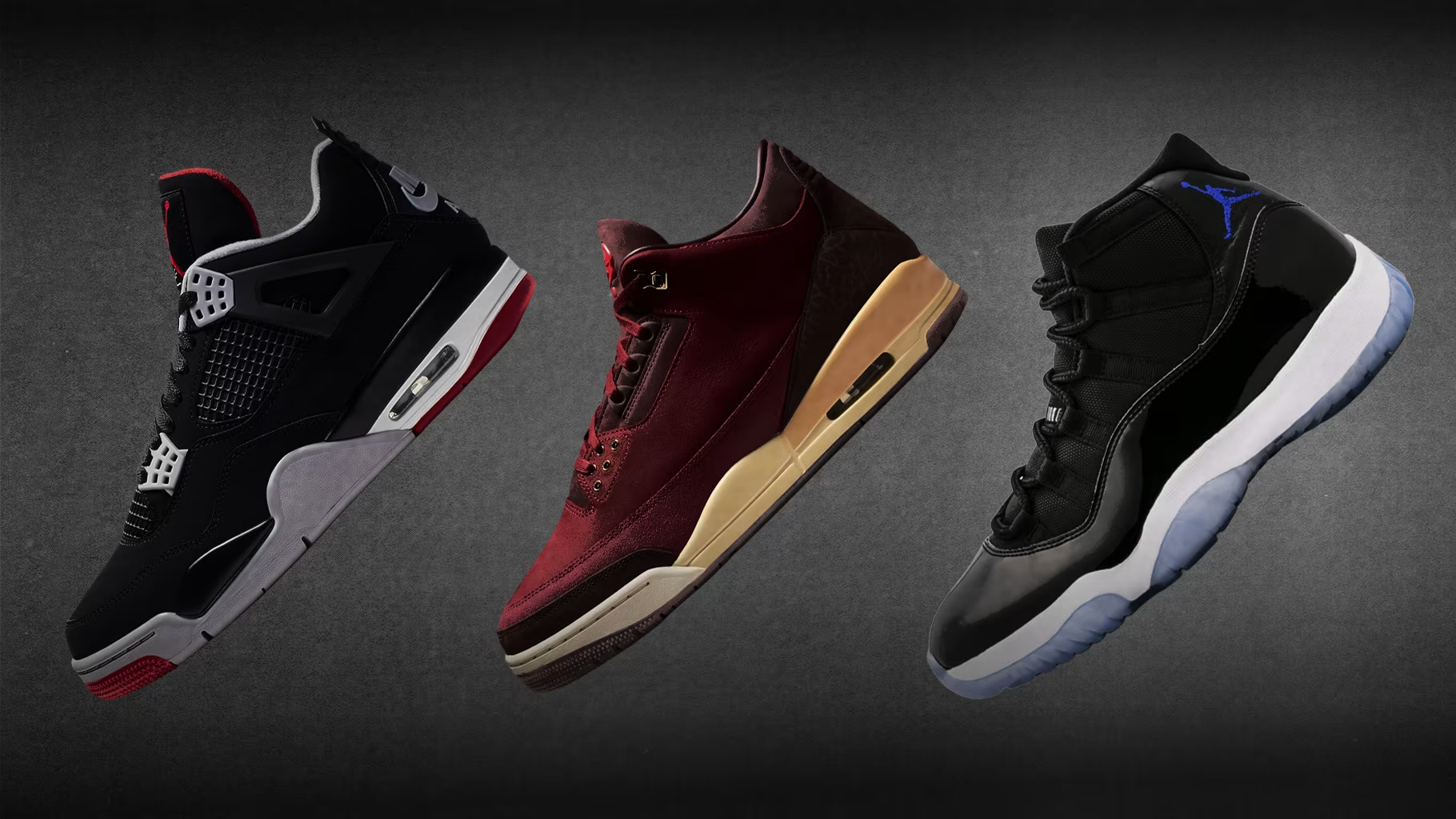
In the realm of basketball style, Michael Jordan has done wonders. He started wearing bigger shorts so he could put a pair of UNC shorts underneath, and started wearing black socks with his sneakers on the court too. Speaking of sneakers, it's pretty obvious what his legacy is in that world. Jordan made shoe brands realize the potential of athlete endorsements, until him, tennis stars were the ones with signature shoes. The term "game changer" gets abused in every other blog post these days, but when it comes to Jordan, it rings true.
Beau Brummell
Visible Influence: Tailored Clothing, Grooming, Suits and Ties
Without Beau Brummell, menswear as we know it wouldn't exist. His personal style was the basis for the modern-day suit. He preferred wearing a neatly-tied cravat with each outfit, and he also was known for habits like bathing daily and brushing his teeth—something that was totally unheard of at the time. He also purportedly shined his shoes with champagne... but that didn't really catch on as much as the other stuff.
Levi Strauss
Visible Influence: Jeans
Most guys have that one piece in their wardrobe they keep reaching for again and again, and nine times out of ten, that piece is a pair of jeans. Levi Strauss invented the jeans back in the 1870s, for gold miners who wanted a durable pair of dungarees. By using tough fabric and riveting it together, he succeeded in creating one of the most beloved menswear items of all item. The 501 silhouette made its debut in 1890, and men still haven't stopped wearing them.