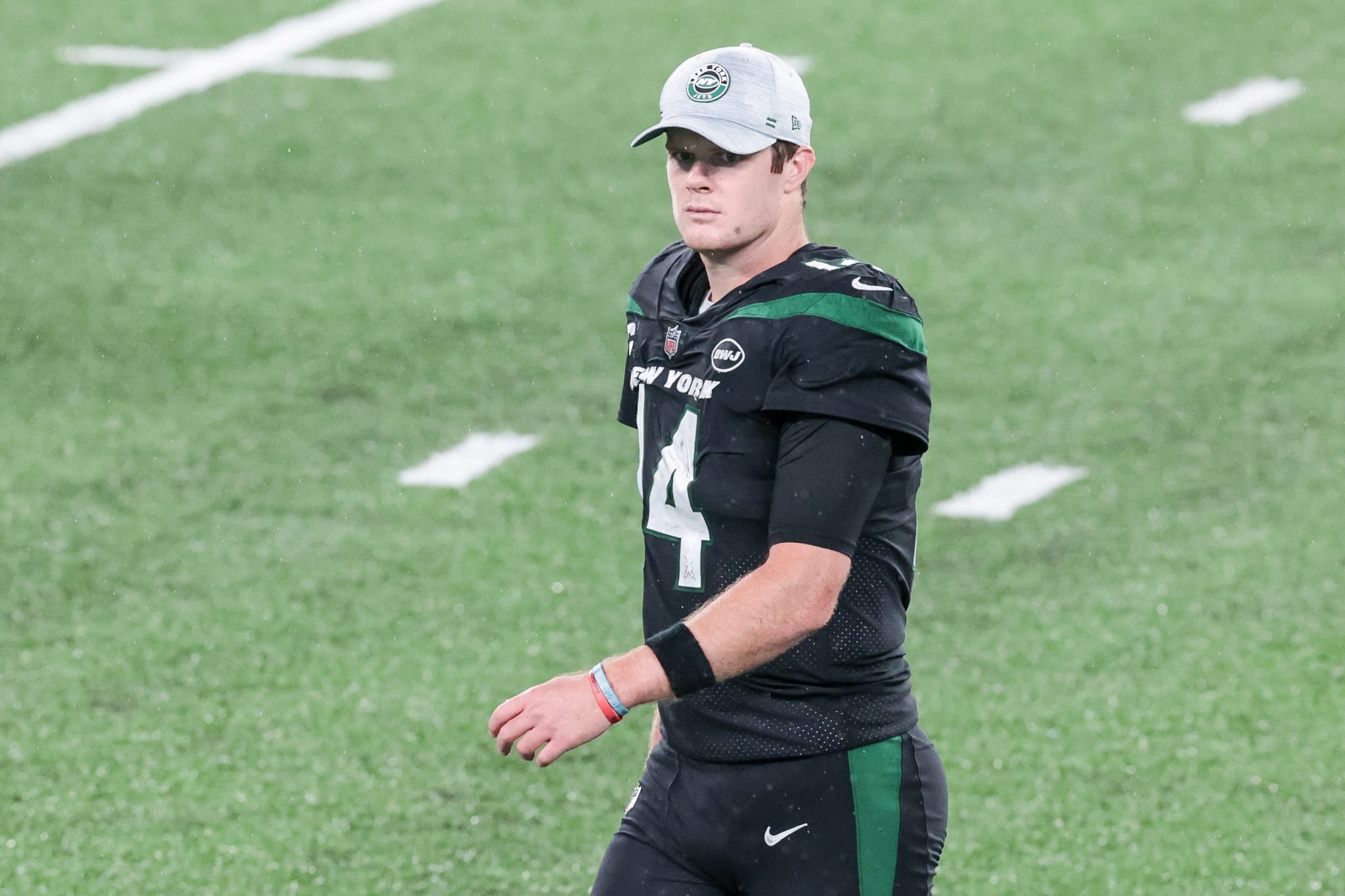
Oct 1, 2020; East Rutherford, New Jersey, USA; New York Jets quarterback Sam Darnold (14) walks off of the field after his game against the Denver Broncos at MetLife Stadium. Mandatory Credit: Vincent Carchietta-USA TODAY Sports
The quarterback carousel continued to bring change across the league on Monday afternoon. The Jets announced a trade with quarterback Sam Darnold going to the Panthers for multiple draft picks. The 23-year-old Darnold will get a fresh chance with two years left on his rookie deal and the Jets are now locked in to select a quarterback in the 2021 NFL Draft.
The fallout goes beyond the Panthers, Jets, and Darnold, though. We have winners and losers from all angles from the deal. This is a trade that can affect multiple franchises for years to come.
Winner: Sam Darnold
Going from a franchise actively exploring veteran and rookie replacement options to one that moved assets to acquire a player is always a positive. Darnold is now in a situation with a newer staff that has both job security and the luxury of some patience. The Panthers’ decision to move a 2022 second-round pick as the headlining asset isn’t something that can be brushed off.
Darnold’s fifth-year option will reportedly be picked up at a guaranteed $18.86 million, making him clearly the guy in Carolina for the next two seasons. There’s been a lot of hand-wringing and debate over Darnold’s upside despite poor play over the last three years and this is a fresh start for him to establish himself as a franchise passer.
Carolina also boasts a big upgrade as far as a situation. Joe Brady is a standout play caller and designer to start. He also has great weapons like Christian McCaffrey, DJ Moore, and Robby Anderson.
If Darnold is going to make it work, it’ll be with the Panthers.
Loser: Teddy Bridgewater
Bridgewater now appears to be the next quarterback on the move with Darnold taking over in Carolina. The 29-year-old was decent, but not great in his first season with the Panthers, showing great accuracy yet providing limited impact in a good offense. The Panthers can save money and accumulate some assets by moving him to another needy team.
Bridgewater is a mediocre starter because he doesn’t push the ball downfield effectively or often enough. But he takes what’s given to him and plays extremely smart, which is the opposite of how Darnold operates. There’s comfort for a well-rounded team in having a high-end game manager like Bridgewater as a stopgap or short-term starter.
It’s now likely Bridgewater goes elsewhere to compete for a starting job or be the clear backup and has a worse surrounding cast. Denver is likely the only potential landing spot where he’d see even better playmakers than his current situation, but it’s probable incumbent Drew Lock would be favored to win the job in a battle based on his physical attributes and perceived upside.
Winner: Zach Wilson
The Jets are now all-in on Wilson. He projects as a great fit in offensive coordinator Mike LaFleur’s offense thanks to his accuracy, ability to create outside of the pocket, and comfort executing easy reads. He can start Day 1, and take advantage of a rebuilt offensive line and revamped receiving corps.
The Jets can continue to throw assets into the offense around Wilson and do their best to prevent the stagnation Darnold experienced. He’ll star on rollouts and the smartly-designed play-fakes LaFleur picked up from Kyle Shanahan in San Francisco. We’ll see a completely different unit in New York.
Wilson has some work cut out for him. The transition to bigger, faster defenders and more difficult schemes while under the bright lights of New York will be intense. But he’s in the best position possible to flourish.
Loser: Joe Brady and the Panthers Playmakers
Anyone who was high on Darnold as a prospect out of USC believes he still has the talent to right the ship, and they could be correct. Adam Gase was a disaster for the Jets and sunk a decent team to a lower level. However, Darnold’s play has mirrored what he did at USC and his ineffectiveness shouldn’t be surprising.
His arm talent is good, but not great as far as strength, and he struggles massively with turnovers. His best throws are out of the pocket and out of scheme, but part of the reason he has to break the pocket is his slow pre-snap processing. His mental acuity has to improve.
Joe Brady will help him get rid of the ball quicker and find receivers easier, but Darnold will frustrate the play caller and playmakers every time he passes up an open target. Carolina’s offense is more built on timing than hero-ball. Adjustments will need to be made by every party for this unit to flow.
Winner: Quarterback-needy teams
There weren’t a ton of teams interested in Darnold’s services. His age is a plus, but his play has been clearly below-average since entering the league. The Panthers were able to nab him for a reasonable cost because there was never a bidding war for him.
The biggest impact across the league is Carolina being out of the quarterback market with their first-round pick. They’re now a candidate to take a talented blocker, cornerback, or trade down. They could believe Atlanta will grab a quarterback at No. 4, or whomever will be available at their pick was inferior to Darnold.
Other quarterback-needy teams will be excited to see Carolina out of the race for the position. Bridgewater is available and was better than Darnold last year, and the likelihood of one of the top-five quarterbacks falling further is higher. Trading up became cheaper for New England, for example.
Loser: QB5 in the 2021 draft class
The ceiling for the fifth first-round quarterback remains as high as seven to Detroit as the draft order sits today. But the floor gave out with this trade. If Denver and New England pass on a rookie, QB5 may not hear their name called until Washington at No. 19.
We can’t assume a trade-up will occur. Teams rarely act as desperately as fans and analysts project, which is why Lamar Jackson fell to 32nd in 2018. This ripple effect could be massive.
The positive for the quarterback is their chance of falling to a better overall situation and team is more likely. Going to a poorly run franchise is a death knell for all but the best quarterbacks. A mediocre quarterback can be propped up in the right situation and make championships possible.
However the short-term fall stings and it’s not as exciting to sit for a year or two behind a veteran. The odds of us seeing four or five rookie starters significantly dropped with Carolina out of the mix.