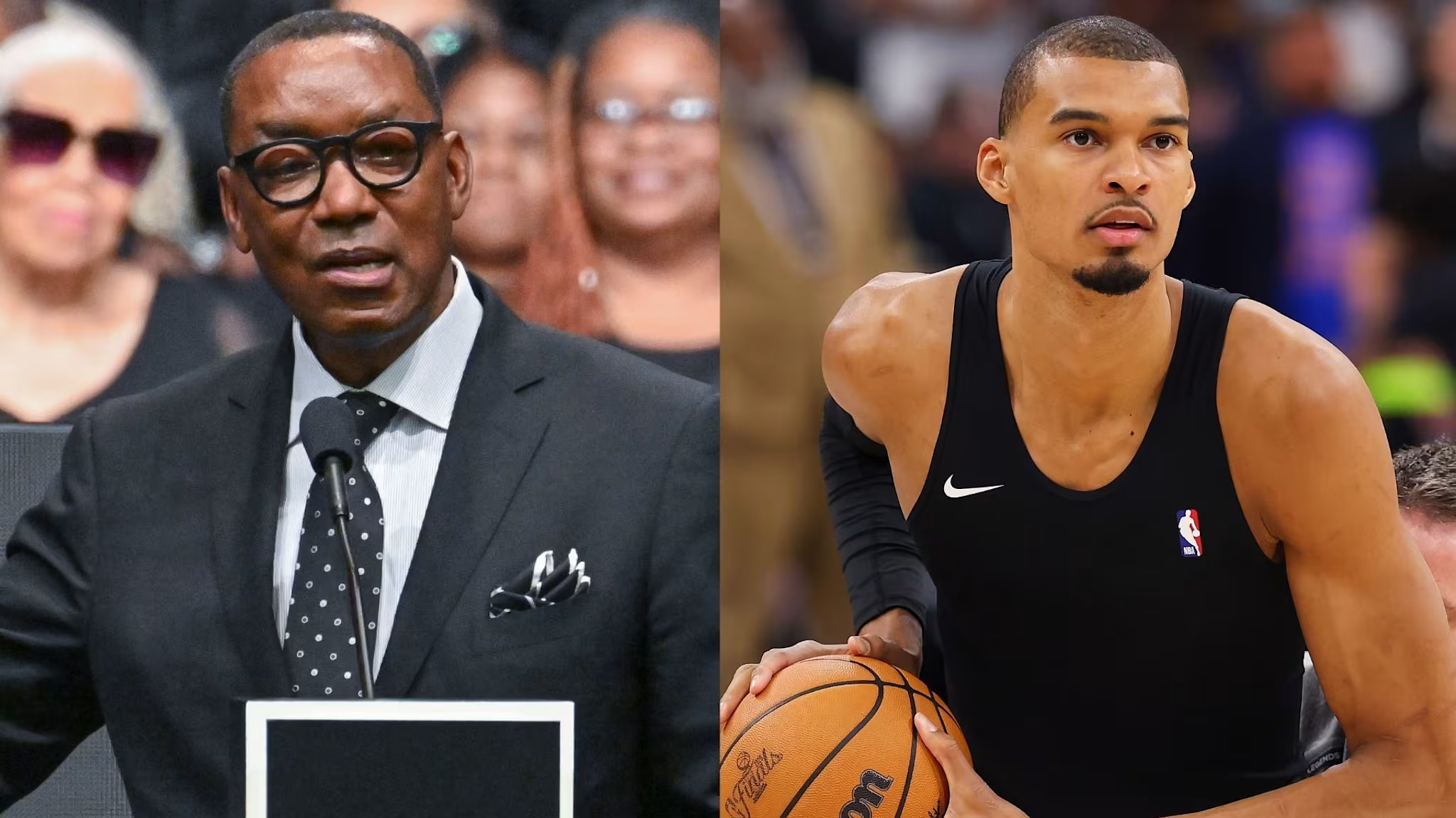
Isiah Thomas isn't convinced the NBA's next face should automatically be Victor Wembanyama.
During a recent appearance on the Crossover Podcast, the Hall of Fame point guard questioned why the league continues to push the San Antonio Spurs superstar while overlooking what Jalen Brunson accomplished after leading the New York Knicks to their first championship since 1973.
The conversation comes after a postseason that put Wembanyama under an intense spotlight. The French phenom made headlines for a series of controversial moments, including foul controversies, physical play, criticism over his posture during the national anthem, and a bizarre ending to his final press conference after the Spurs’ Finals loss.
One of the podcast hosts bluntly asked Thomas why the NBA appeared to be promoting Wembanyama over Brunson.
“Why are they trying to force it on Wemby?” the host asked. “Jalen Brunson just delivered the first championship in New York since 1973. Why can't he be the face of the league?”
Thomas said he has heard that question before.
“That was the question we was asking in Detroit when we beat Bird, Magic and Jordan, but they made Jordan the face of the league,” Thomas recalled. “Here in Detroit, they were saying, ‘Why can't I be the face of the league? Why is this one elevated when you see him three, four years in a row beating your face of the league?’”
According to the two-time NBA champion, the answer isn't always about who the best player is.
“When you ask that question, it's a much deeper question in terms of who they want to be the face of the league, not who's the best,” Thomas said. “The small guys, we always have to take a step back because what we realize as small people is that it's a 6-6 and above category.”
Thomas, who spent all 13 seasons of his NBA career with the Detroit Pistons and won back-to-back championships in 1989 and 1990, has long argued that undersized guards don't receive the same credit as bigger stars. The 12-time All-Star and 1990 Finals MVP was inducted into the Basketball Hall of Fame in 2000 and remains one of the game's most outspoken analysts.
He doubled down on that point by arguing that victories by smaller players are often discounted.
“Because of their genetic gifts, size, and weight, they have an advantage,” Thomas said of bigger players. “But we have zero advantage. But when we beat them, it's discounted. When it should be weighted heavily.”






