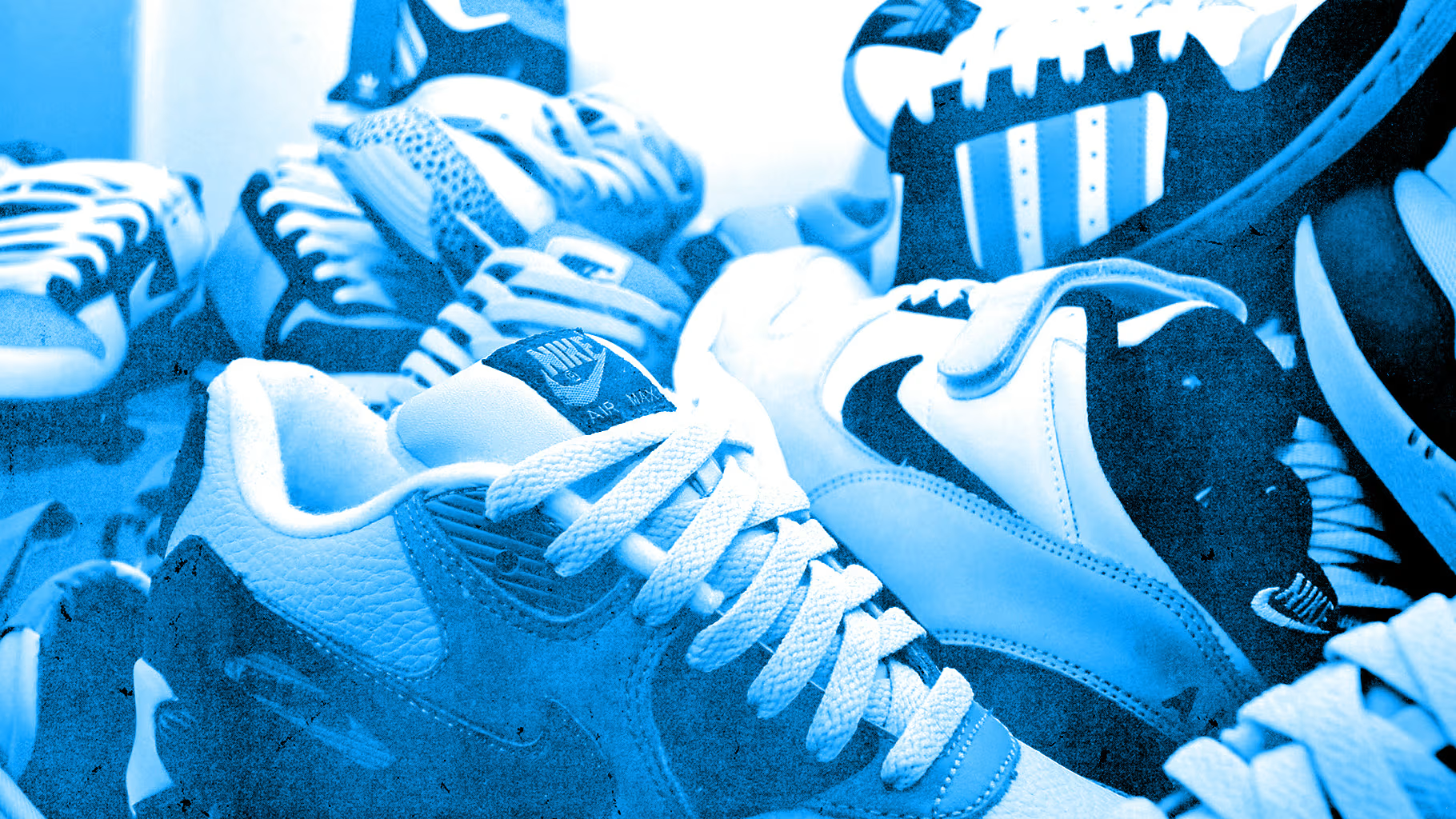
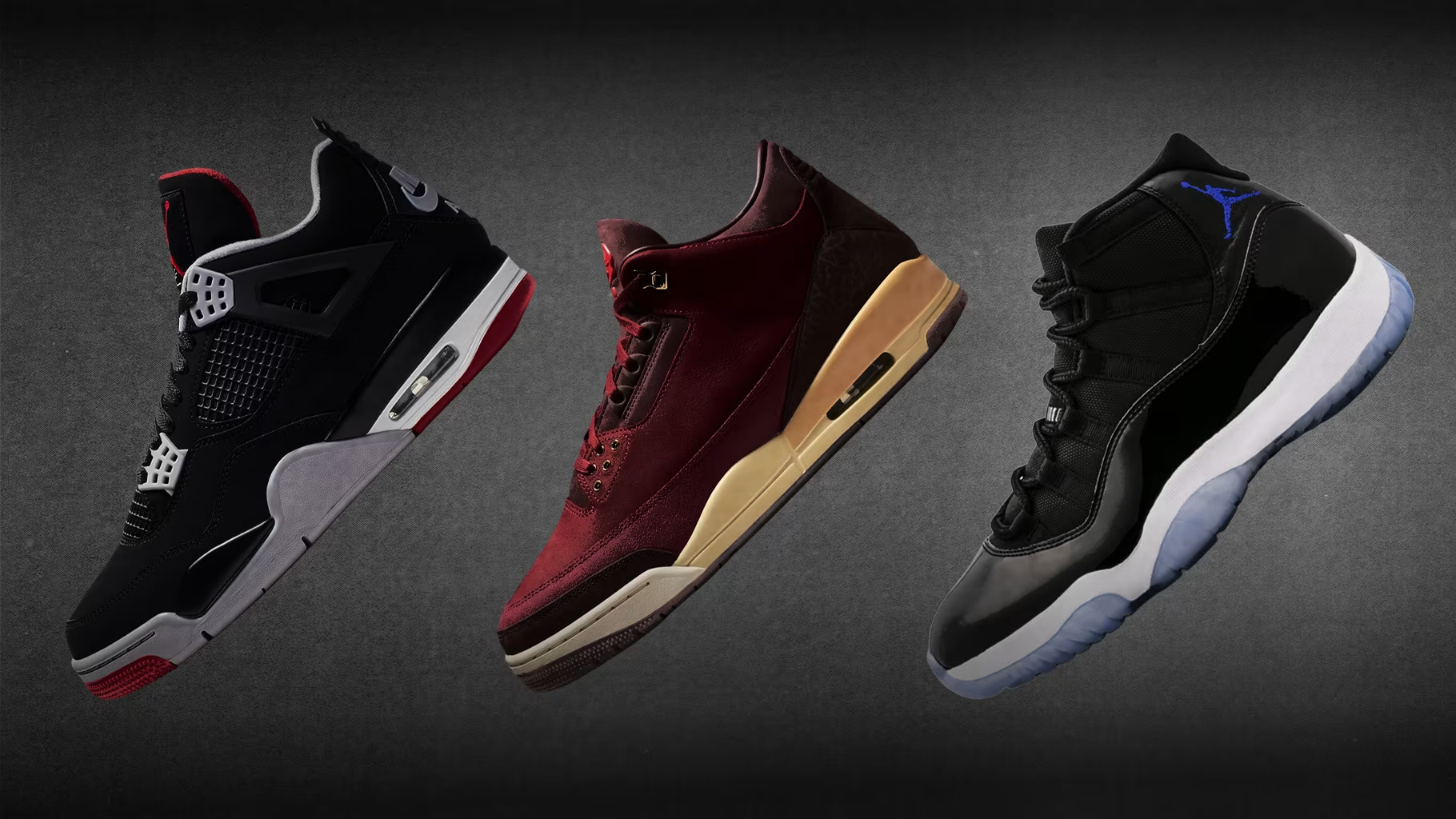
Image via Complex Original
In 2013, what defines a "skate shoe" can be ambiguous. The large athletic brands—Nike (and Converse), adidas, Puma and New Balance—all have their hat in the skate shoe ring, and all make great product. But there are skate shoes that resemble running sneakers, skate-inspired shoes that have clearly been made for style purposes, and sneakers that have been taken from other sports and given a skate twist. There are also super-plain shoes made for skating. Fifteen years ago, in 1998, things were quite different: Tony Hawk hadn't done the 900, Tony Hawk Pro Skater hadn't come out yet, and this was the last year that skateboarding was still "underground."
At this junction in skate shoe history, sneakers became inflated. They literally ballooned with fat tongues, added rubber toe panels, had secret stash pockets and air bubbles, and didn't cost a penny over $100. The skate industry was still run by skate brands and you had to often go to skater-owned stores just to purchase a pair of skate shoes—or order them from CCS. As you lace up your Nike SBs, take a look to see how far skate shoes have come. Here are 15 Ways That Skate Shoes Were Different 15 Years Ago.
RELATED: 30 Best Signature Skate Shoes of All Time
RELATED: Skate or Die: 10 Signs It's Time to Throw Those Skate Shoes Away
RELATED: Green Label - The 10 Innovations That Changed Skateboarding
They were only available in skate shops or by mail order.
To be a "skater" in 1998 you had actually know what was up, or be on CCS' mail-order list. Skate shops weren't in malls, and you had to head to skater-owned brick-and-mortar stores to cop skate shoes. More mainstream brands such as Vans, Airwalk, and Simple were available at niche sneaker stores, but if brands such as Duffs, DC, éS, and Emerica had to be purchased at a skate shop. If someone was wearing skate shoes, this meant they were down to a certain degree, or someone trying to imitate a skater's lifestyle, hence the word "poser."
Heel tabs, fat tongues, stash pockets, air bubbles, and rubber lace loops
Brands made skate shoes as animated as possible. They took a cue from the world of athletics and put air bubbles on the shoes, but they didn't have the same functionality as a Nike Air Max sneaker. Skate shoes also had stash pockets to conceal skate tools that doubled as smoking devices. The sneakers that existed before this time period were simple and suede. The change to heel tabs, rubber lace loops, and fat tongues also effected the tricks that were being performed. Hence the birth of the "illusion" flip.
Skate shoe brands only made shoes for skating.
Skate shoe brands have become complete sneaker brands. They offer an entire lifestyle to the people who skate in their shoes, which means there are sneakers made for activities other than skateboarding. Fifteen years ago, skaters only wore skate shoes. Or they were wearing Air Jordans or Air Maxes for their chilling. There weren't running sneakers designed by skate brands. Skate shoe brands stayed in their lane and made their product to be used in a functional manner.
Skate shoe brands didn't make videos.
Many of the best videos of the last couple years have been put out by shoe companies—Lakai, Nike SB, adidas, Emerica—but in 1998, board companies dominated the video market. The most influential videos were put out by skate brands and magazines. Zoo York's Mixtape, Transworld Skateboarding's The Sixth Sense, Toy Machine's Jump Off a Building, and Birdhouse's The End were what skaters watched to get amped before a day of skateboarding and helped influence the state of the industry. It wouldn't be until 1999 that Osiris released The Storm and eS's 2000 skate video, Menikmati, would change how we viewed skate shoe videos.
Nike SB didn't exist.
Nike scrapped an initial attempt at a skate shoe program in 1996, during skateboarding's dark ages. Nike SB didn't launch until 2001, and for a few years starting in 2000, Savier sneakers served as Nike's serious skate shoe effort.
Only skaters wore skate shoes.
The market has expanded, everyone wears skate shoes now. Lil Wayne has a signature shoe with Supra. But in '98, skate shoes were only found on the feet of skaters. They weren't attractive to people who didn't skate. The skate industry wasn't as flashy as it is nowadays. Telling someone you skated wouldn't get you laid, so no one imitated how skaters dressed, down to their feet.
Collaborations were rare.
Sneaker collaborations are everywhere in 2013, even in the skate industry. But this concept didn't really exist in 1998. There were signature sneakers and team shoes, and that was it. Outside brands weren't attached (or welcomed) to randomly design a company's silhouettes at a feverish pace.
There were no $100 skate shoes.
To be fair, sneaker prices in general in 1998 weren't nearly the same as they are today, but skate shoes weren't $100. There were models that reached into the $90 range, but skate shoes could be purchased easily for $85 and under. This also helped skaters keep a new pair on their feet when they started to break down, but some sneakers from this era—with their nearly-rubber uppers—were nearly indestructible.
Skate shoes were made by skate companies.
The big brands have laid claim to their marketshare, and it appears they aren't going anywhere. But don't be quick to dismiss them, they're making a valuable contribution to the innovation and progression of skate shoes, and to putting cash in the pockets of our favorite pros. Nike, adidas, Converse and New Balance weren't in the game, not the way they are now. Adidas and Converse tested the waters, but it would be years before either had reputable skate programs.
Classic styles have re-emerged.
It's hard to imagine a time when classic skate shoe shapes from Vans and other brands weren't widely available, but in 1998 basic vulcanized sole skate shoes were rarities. They could still be found, but were viewed as the lower-end of a skate brand's offerings.
Technology was all for show.
For years, most skate shoe innovation was in lacing systems, ollie pads, and visible air pockets. In other words, parts of the shoe you noticed on the shelf or in a catalog. Now we see more technology put into the guts of a shoe—the Nike Eric Koston Lunar insole, for instance. Some of the most advanced skate shoes out right now have deceptively basic-looking silhouettes.
Skate shoes were big, ugly, and not particularly good for skating.
Browse an old copy of CCS or back issues of Thrasher and the first thing you'll notice about skate shoes from that time is that they were enormous. Like giant leather and rubber muffins for you feet. Almost every sneaker had a fat tongue, and minimized board feel. Not only were the shoes clunkier, but the soles were also thicker and not as flexible.
There was a narrower range of design inspiration.
There is a wider range of references today—soccer shoes, trainers, runners, designer sneakers, all influence skate shoes. In the late '90s, a lot of skate shoes looked very similar. Granted, skate shoes looked wonkier, they but they looked like skate shoes. Not something that you'd take to the track.
Pro models weren't dominant.
All of the best, biggest selling skate shoes today are pro models. There are more pro skate shoes today, just look at DC Shoes. And a pro skater's co-sign means more than ever. In '98, it was more about which brand you supported than which pro you were down with. There seemed to be a different set of morals if you were an Osiris dude versus someone who wore éS. Brands such as Emerica would publish ads that promoted team shoes, not signature models.
Everyone skated the same type of shoes.
Yes, there were highs and mids and lows, but other than that, most skate shoes looked and performed the same 15 years ago. The landscape of skate shoes today is full of variety. There is a skate shoe for you no matter what your style of skating, needs for performance, and personal taste. From high fashion to full-on impact trainers. For most of skate shoe history, all shoes more or less looked the same.