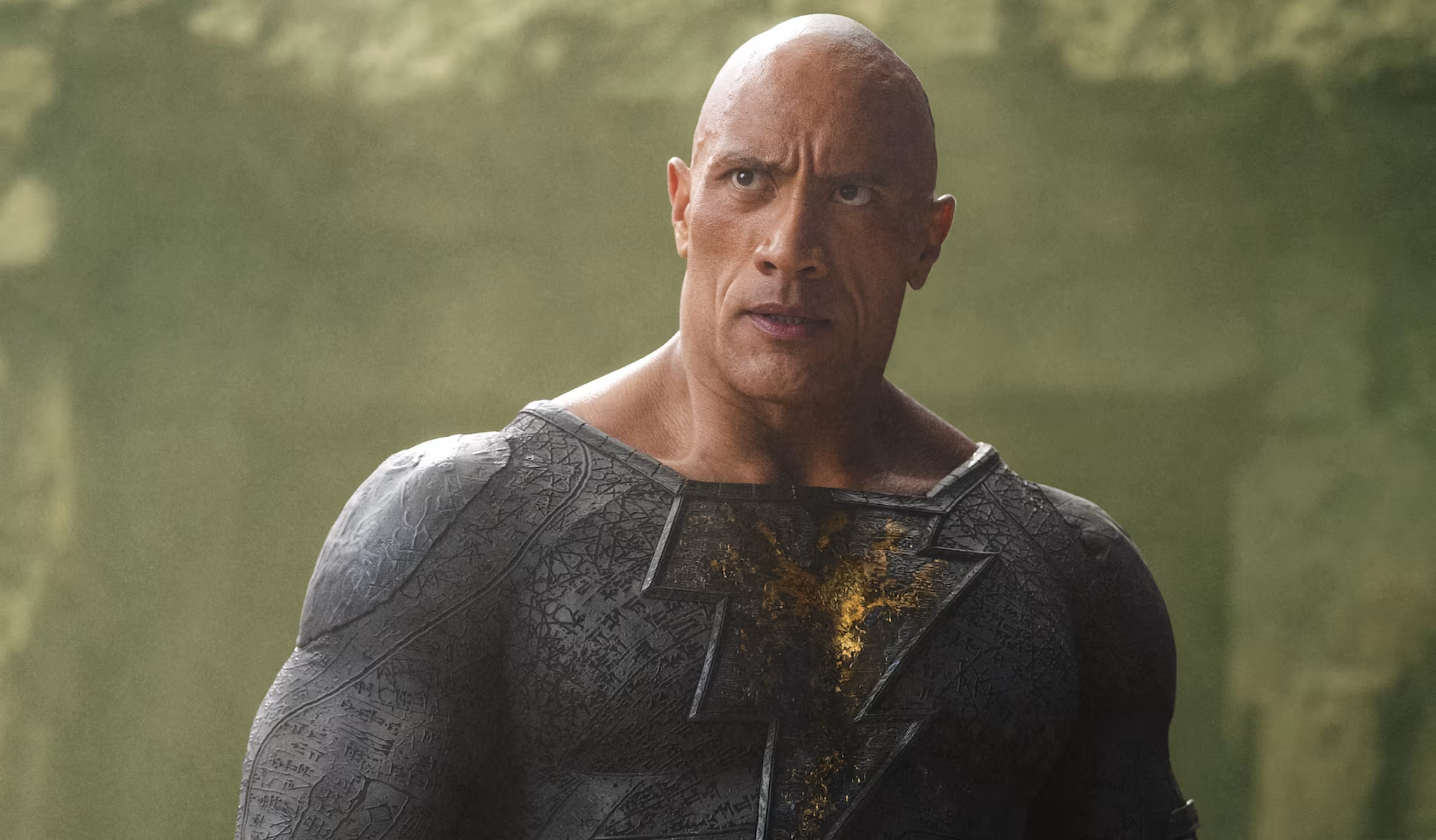
Image via Warner Bros.
What does it mean to be a hero? In most tales in the superhero genre, the answer to that question is a black-and-white binary. Reality is much more complicated, as someone’s protector is just as easily another person’s intimidator. That tension is at the heart of Black Adam, the latest entry into the DC Extended Universe, diving into a morality tale of what it means to be a hero.
Black Adam’s central thesis is present from the very beginning, where an expository voiceover details the history of Teth-Adam (Dwayne Johnson) and his native city of Kahndaq. Nearly 5,000 years ago, Kahndaq had substantial wealth and power thanks to a resource known as Eternium. That is until Kahndaq gets invaded, has its people enslaved, and the rich deposits of Eternium mined to create a crown capable of summoning a great evil.
To stop this evil, the Council of Wizards (last seen in 2019’s Shazam!) declare a young boy worthy of their power, transforming him into a hero capable of saving the day. While Teth-Adam succeeds in stopping this great evil, the ensuing chaos brings down the Kahndaq palace and all those inside it—including Teth—but not before his deeds become legend.
Flash forward to the modern day, and Kahndaq continues to fall from one oppressor after another. The latest, Intergang, rules the city with an iron grip as they search for the ancient crown. Kahndaq denizens, including Adrianna Tomaz (Sarah Shahi), her brother Karim (Mohammed “Mo” Amer), her son Amon (Bodhi Sabongui), and their associate Ishmael (Marwan Kenzari) are soon in a race against time to get to the crown before Intergang does.
As both parties close in, Adrianna manages to conjure Teth, whose rage draws the attention of tenured Justice Society of America members Carter Hall/Hawkman (Aldis Hodge) and Kent Nelson/Doctor Fate (Pierce Brosnan), alongside new recruits Maxine Hunkel/Cyclone (Quintessa Swindell) and Al Rothstein/Atom Smasher (Noah Centineo) who all set out to stop Teth. It’s then only a matter of time before a larger threat emerges that forces the JSA and Teth to work together to save both Kahndaq and the world.
If the plot of Black Adam sounds overly familiar, well, that’s because it is. The script (credited to Adam Sztykiel, Rory Haines, and Sohrab Noshirvani) rarely elevates itself past a tried and true story of what it means to be a hero, good versus evil, and many other anti-hero tropes audiences are more than likely familiar with by this point. Those plot choices, partnered with directorial decisions from helmer Jaume Collet-Serra, create tonal whiplashes that are often hard to decipher. Is a “Paint it Black” needle drop over an action sequence wherein Teth viciously murders a bunch of Intergang goons too self-aware or not self-aware enough? Are Johnson’s quips meant to fall flat as he works to adjust to modern-day reality? Is a scene featuring Clint Eastwood’s Man with No Name meant to be a nod toward how superhero movies are now the modern-day Westerns?
Your answer to these questions will likely determine how you feel about the film overall, but for me, each of these decisions, combined with Marvel-like moments of deeply unfunny jokes, worked against Black Adam instead of in its favor. The movie’s breakneck pacing moves at such a rate that it doesn’t provide a lot of time for you to invest in some of the Justice Society members; Hodge and Brosnan, in particular, are supposed to have an extensive history together, but the script doesn’t give them the depth they need to effectively establish that connection—despite strong efforts from both performers.
A few elements do fare better, though, including the film’s exploration of rage and oppression. After facing wave after wave of invaders, the citizens of Kahndaq yearn for freedom, even if it comes with considerable bloodshed at the hands of Teth. That idea feels pretty bold for a superhero movie and makes Teth a compelling and understandable character. Johnson turns in a good performance here, leveraging the physicality and vulnerability of Teth’s anger in a way that’s a welcome departure from the smirking jokester roles he’s taken in the last decade. As such, the best moments of Black Adam are when Johnson can filter those themes through his performance. Collet-Serra also conjures some good action sequences; a mid-movie battle between Teth and the Justice Society has clever staging and fun beats, standing out accordingly. While the dynamic between Hodge and Brosnan doesn’t fill as deep as it should, the youthful optimism between Swindell and Centineo plays much better, even if the latter feels like he’s cribbing elements of his performance from Tom Holland’s Spider-Man.
Black Adam is at its best when it leans into the anti-hero spirit of its lead and uses him to explore some weightier topics that aren’t often at the core of big blockbuster superhero films. Outside of those ideas, the movie falls into a typical formula that doesn’t deviate from the genre playbook. While the real-world morality that Black Adam seeks to explore is complicated, the overall takeaway from the film isn’t—it’s just another standard entry into the superhero canon.




