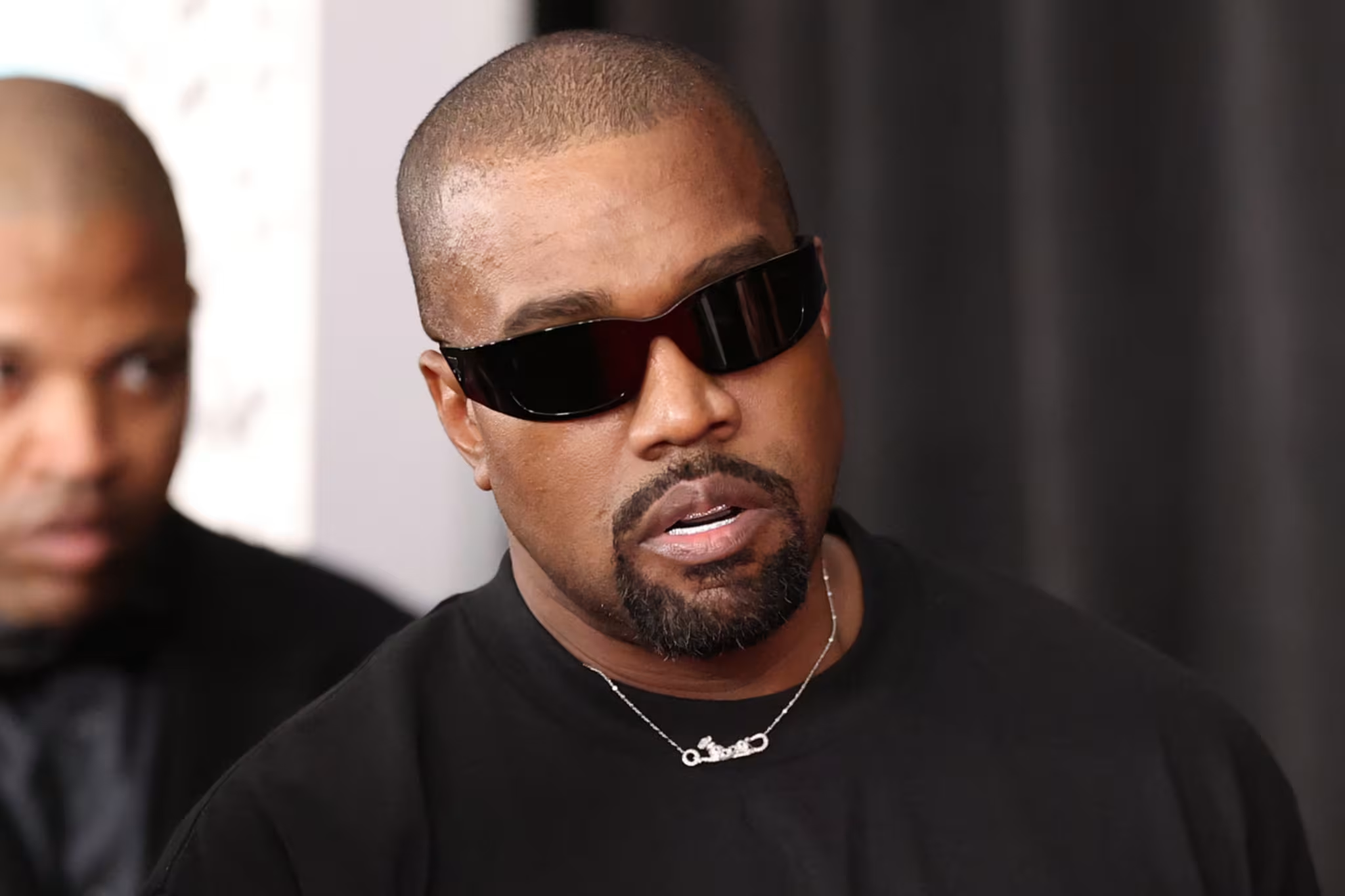
Nico Ballesteros wants to bear witness.
The filmmaker was just 18 when he started work on what would ultimately become In Whose Name?, an unflinching distillation of six years in the life of the artist formerly known as Kanye West.
The documentary is a lot of things—more often than not, it is all of them at once—but it is not a direct critical meditation on, or rationalization of, latter-day Ye. Still, the film should function as a salve, of sorts, for disenchanted fans.
As Ballesteros tells Complex following the film’s video-on-demand release, central to his underlying ethos was a strict adherence to “observational distance,” both while shooting and during “thousands of demanding hours in the edit.”
In our conversation, he links this approach to two separate but complementary ideas: cinema vérité and metamodernism. The latter should ring familiar to longtime readers who may recall its association with Shia LaBeouf’s years-long series of collaborative performance art projects, including one in which fans were invited to join him in a theater for a marathon of the actor’s own filmography.
Like much of its subject’s works, In Whose Name? is also intended to be ever-evolving. This aim extends to Ballesteros himself, who reveals to Complex the discovery of “another film” embedded within unused documentary footage. And, yes, he also confirms he’s working on that film now.
Below, see more from our conversation.
Previously, you teased a director's cut of the film. What's the status on that version of the film? What can we expect from a presumably more expanded version of the story?
When I went back into the footage to explore alternate and extended cuts, it became clear that another film was embedded within the unused material, one that I am working on now.
With In Whose Name? now out for a wider audience, how are you feeling? Does this feel like the end of the journey with this particular story?
This story exists within the broader zeitgeist, independent of where I am in the timeline. It continues to evolve as audiences engage with and interpret it. Cinema vérité is a fading art form, one I’m actively championing, and because of that, I believe the film has an evergreen quality. It will continue to live on, resurfacing and reshaping itself through natural cycles of discovery and re-evaluation.
How do you view acclaim now that you've been on the receiving end of it?
Recognition may arrive along the way, but it remains secondary to the responsibility of making something honest, lasting, and alive.
Given that you pulled from thousands of hours of footage, I can imagine the editing process was, at times, grueling. Did you have a particular mantra or ethos you held to when deciding what would, or what wouldn't, make the cut?
Because the film functions more as an artifact than a construction, the cut ultimately revealed itself over time. After thousands of demanding hours in the edit, the guiding principle became fidelity to the timeline and the natural sequencing of events. The discipline was in listening to what the material wanted to be. Many of the most expansive and striking moments didn’t disappear; they simply belonged elsewhere, now finding their place organically in the new film I’m developing.
The film captures several moments that are rather objectively uncomfortable, whether a given viewer is a lifelong fan of Ye's work or not. Were there any particular moments that had special meaning to you as a filmmaker, that maybe took you out of your role and made you feel grateful to just be in the room while it was happening?
At times, authorship dissolved entirely, and it became an out-of-body experience. By the time that sensation lifted, the film had taken its final shape.
The film never makes a judgment on what's being depicted. How important was it for you to retain your status as an observer without injecting yourself into the story?
Maintaining that observational distance was essential. In a cinema vérité framework, the filmmaker’s responsibility is not to arbitrate meaning but to bear witness with rigor and restraint. Much like a journalist embedded in a conflict, my role was to document events as they unfolded, without imposing commentary.. The audience deserves the space to encounter the material on its own terms and to arrive at their own conclusions. That ethical clarity is foundational to the tradition the film operates within.
When was the last time you talked to Ye?
Thanksgiving.
What's next for you as a filmmaker and storyteller?
The Skin of Reality. To be announced, so can't tell you anything about it yet.
Do you have any advice for other filmmakers who may be eyeing a similarly daunting storytelling project, or simply looking to strike out on their own while unsure what will come of their journey?
Work with sincerity while accepting uncertainty. A metamodern approach means holding conviction and doubt at the same time, committing fully to the story without needing to know where it will land. Trust the process, stay ethically grounded, and allow meaning to emerge through persistence rather than control. The work reveals itself to those willing to remain open long enough to listen.
Define art in your terms. Can anything be art?
Today, art is an oscillation between irony and sincerity.