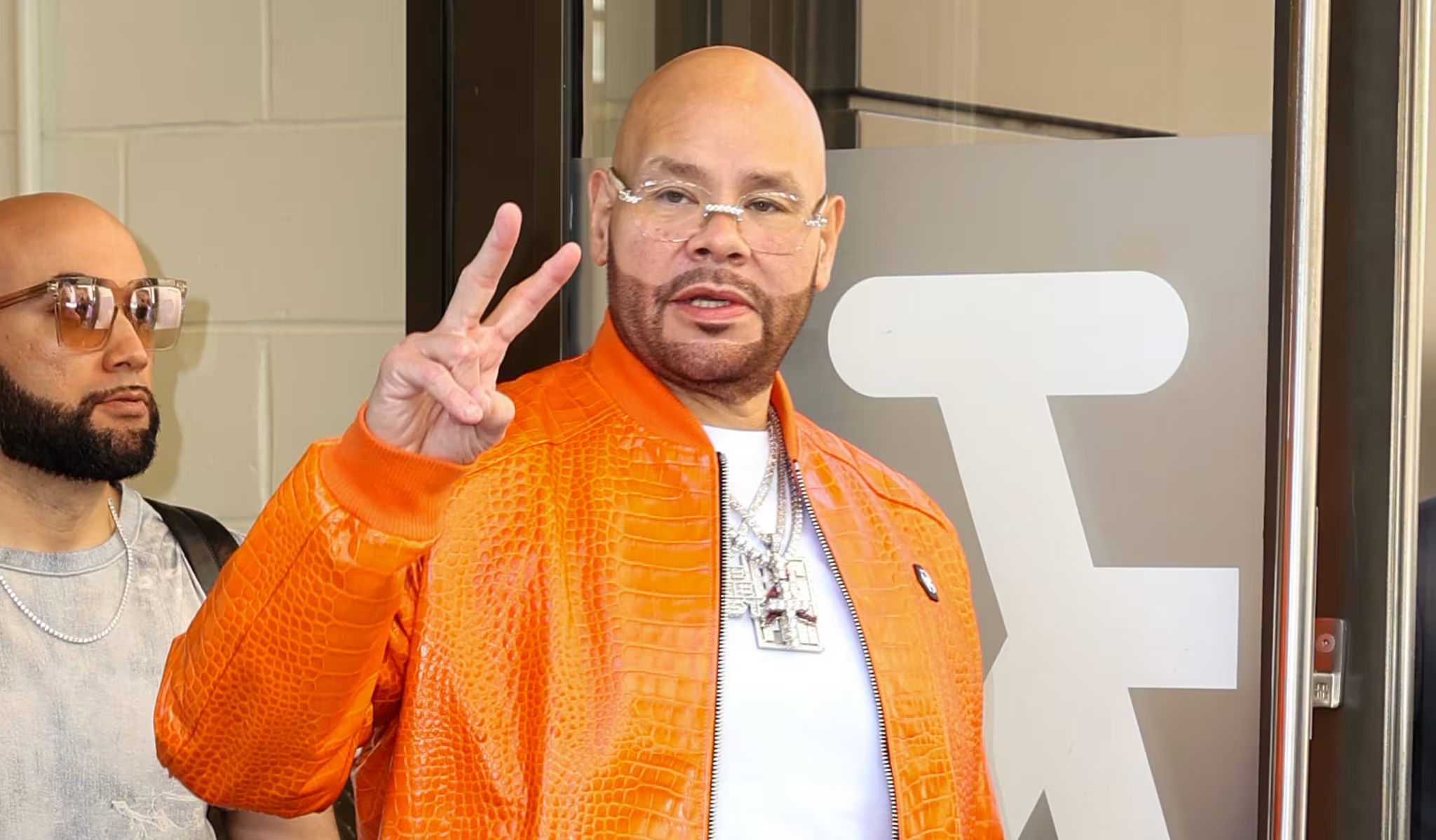
A federal judge has sanctioned attorney Tyrone Blackburn after finding his conduct during depositions in Fat Joe's ongoing legal battle with former hype man Terrance Dixon crossed the line and disrupted the judicial process.
In a June 23 order, U.S. Magistrate Judge Jennifer E. Willis granted Fat Joe's motion for sanctions in part, denied Blackburn and Dixon's cross-motion, and ordered Dixon to sit for a second deposition after determining the original session had been significantly compromised.
The dispute stems from Fat Joe's lawsuit against Dixon, his former hype man, and Blackburn. The rapper sued Dixon and Blackburn for defamation. Dixon later responded with a $20 million countersuit alleging coercive labor, fraud, and sexual abuse, claims Fat Joe has repeatedly denied.
In her ruling, Judge Willis sharply criticized Blackburn's behavior during Dixon's February 24 deposition, writing that the attorney's "homophobic, transphobic, and sexualized comments" directed at opposing counsel "shock the conscience."
"The Court has never seen the sort of behavior from an attorney that Blackburn engaged in at the deposition on February 24th," Willis wrote.
According to the order, Blackburn repeatedly insulted opposing counsel, including asking, "What date is your transition surgery?" and making vulgar remarks about the attorney's mother. The judge also cited an exchange in which Dixon said, "I could take you down with my left hand," before Blackburn responded, "Everybody could take you down" and "Very easily."
Beyond the personal attacks, Willis found Blackburn repeatedly instructed Dixon not to answer questions despite an earlier court ruling requiring him to respond unless a valid claim of privilege applied. The judge said the repeated speaking objections, interruptions, and refusals to answer were so extensive that they prevented a fair examination.
As a result, Willis ordered Dixon to appear for another deposition lasting up to two additional hours on limited topics. She also directed Blackburn not to make speaking objections, improperly instruct Dixon not to answer questions or interrupt opposing counsel during the continued testimony, warning that additional sanctions could follow if those directives are violated.
Blackburn argued that pain medication prescribed after medical procedures earlier this year contributed to his conduct. However, the court rejected that explanation, finding the evidence did not support his claim.
"The medical record does not support Blackburn's assertion that his unconscionable behavior at the February 24th deposition was due to medication he was taking," Willis wrote, adding that Blackburn never sought to postpone the deposition if he believed he was medically unable to participate.
The judge also criticized Blackburn's performance during his own March 6 deposition, where she said he struggled to answer basic questions and initially could not definitively state whether he represented Dixon. Willis concluded there was no evidence medication caused the issues and said any claimed impairment should have been addressed by requesting an adjournment before the deposition.
In addition to granting Fat Joe's request for certain attorney's fees and costs associated with the disrupted depositions, Willis referred Blackburn to the Southern District of New York's Grievance Committee.






