For more than five decades, Roskilde Festival has stood apart by proving that a festival can be more than a line-up of artists and a series of performances. It has become a cultural institution, a place where global superstars, emerging talent, activism and community can exist side by side.
The 2026 edition continued that tradition in style, bringing 140,000 participants together for eight days of music, art and collective celebration in one of Northern Europe’s most influential festival environments. Hosted in one of Denmark’s oldest cities, the 54th edition welcomed nearly 180 artists from 37 countries across 16 stages and experience spaces. Once again, Roskilde demonstrated why it remains one of the world’s most respected festivals—a place where established icons share the same ground as future stars.
The festival’s history of pushing culture forward has always been central to its identity. Roskilde became the first major festival to place an Afrobeats artist in a headline position when Burna Boy topped the bill in 2023, reflecting its commitment to recognising global movements before they become mainstream. From legendary appearances by artists such as Jay-Z, Nas and Kanye West, to its continued support of rising voices, Roskilde has built a reputation for celebrating music history while remaining at the forefront of what comes next.
This year’s showcase delivered another unforgettable run of performances. The newly expanded Orange Stage provided the backdrop for a powerful set from animated rock-pop pioneers Gorillaz, who reminded festival-goers why they remain one of the most inventive acts of their generation.
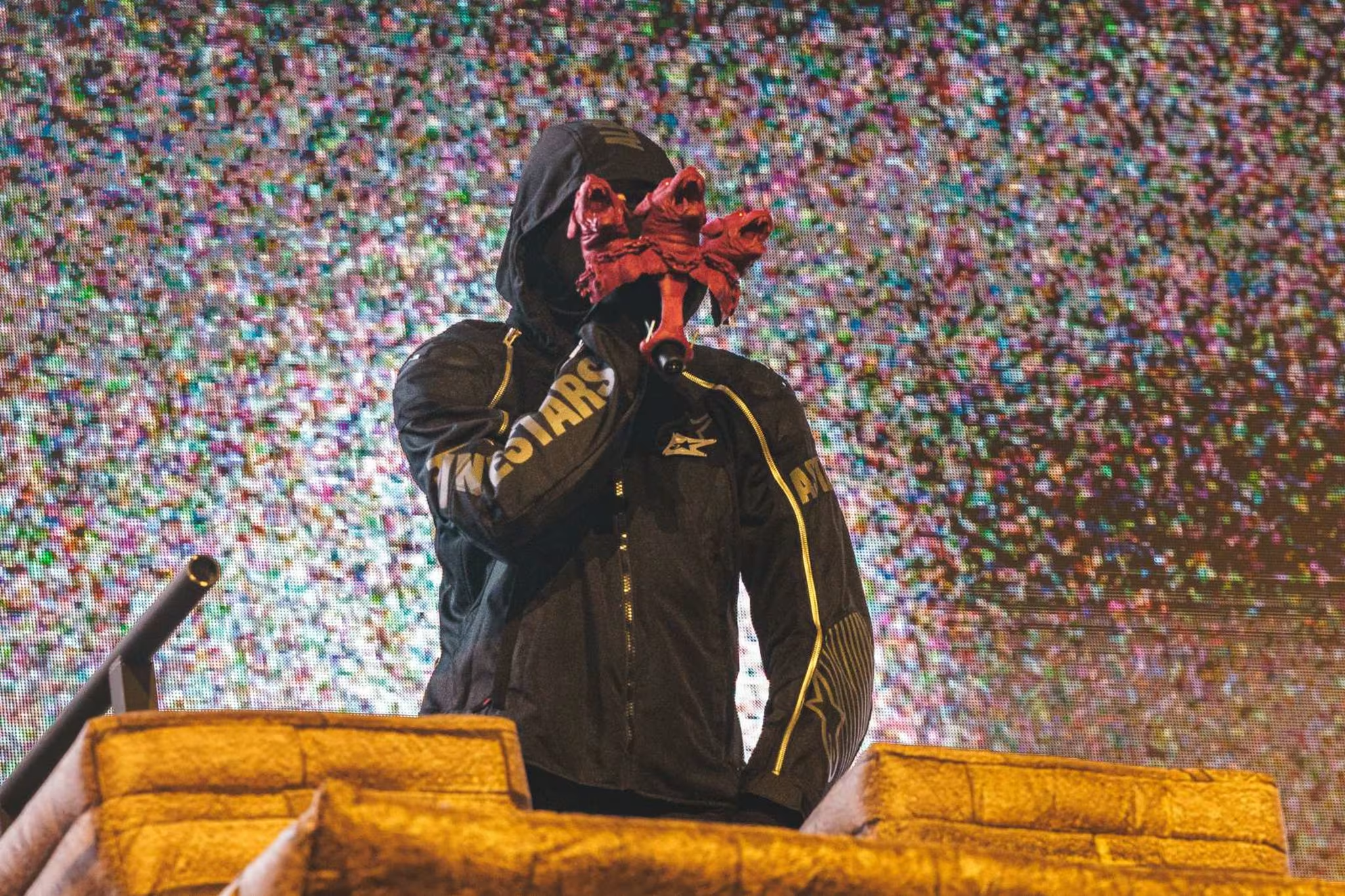
Hip-hop had a particularly strong presence throughout the festival, with Virginia rap stars Clipse bringing their sharp lyricism and timeless chemistry to the stage before Liverpool star-boy EsDeeKid continued his rapid rise with a high-energy performance that showed exactly why he has become one of the UK’s most talked-about new acts (“4 Raws” sent the crowd wild!). North London’s Little Simz delivered another commanding performance, further cementing her status as one of contemporary rap’s most respected talents, while Pa Salieu brought his distinctive style and energy to the stage, adding another standout moment to a stacked week of sets.
Elsewhere across the festival grounds, audiences experienced a wide-ranging selection of performances from artists including The Cure, David Byrne, kwn, JADE, Zara Larsson, Lily Allen, Bad Gyal and Ethel Cain. Breakthrough acts such as Getdown Services at Lagune highlighted Roskilde’s ability to identify exciting new talent, ensuring that discovery remains at the heart of the experience.
Beyond the music, Roskilde continued to expand its focus on art and activism. More than 90 projects from over 30 countries brought installations, performances, discussions and creative experiences to the festival grounds. Climate-focused initiatives with Greenpeace and Nordic Climate Justice Coalition, alongside large-scale artwork from the Piece For Peace Movement, encouraged participants to engage with ideas around sustainability, community and the possibility of building a more responsible future together. That sense of unity was visible throughout the week. Signe Brink Wehl, Director of Art & Activism, highlighted the shared values connecting many of the artists and audiences—a desire for a more caring and peaceful world built through creativity and collaboration. That message was especially clear during Palestine’s Sama Abdulhadi’s performance, where the overwhelming response from the crowd reflected the powerful connection between artist and audience.
Organised by the Roskilde Festival Charity Society and powered by 27,000 volunteers, the festival continues to operate under a unique non-profit model, with all profits donated to humanitarian, cultural and social causes, particularly those supporting children and young people. Since its founding in 1971, Roskilde has generated approximately DKK 476 million for charitable distribution.
After another sold-out edition, Roskilde Festival has once again shown why it continues to lead rather than follow. The festival’s true strength lies in its ability to bring generations, cultures and ideas together, creating a rare sense of connection and shared experience that stays with people long after the final performance ends.






