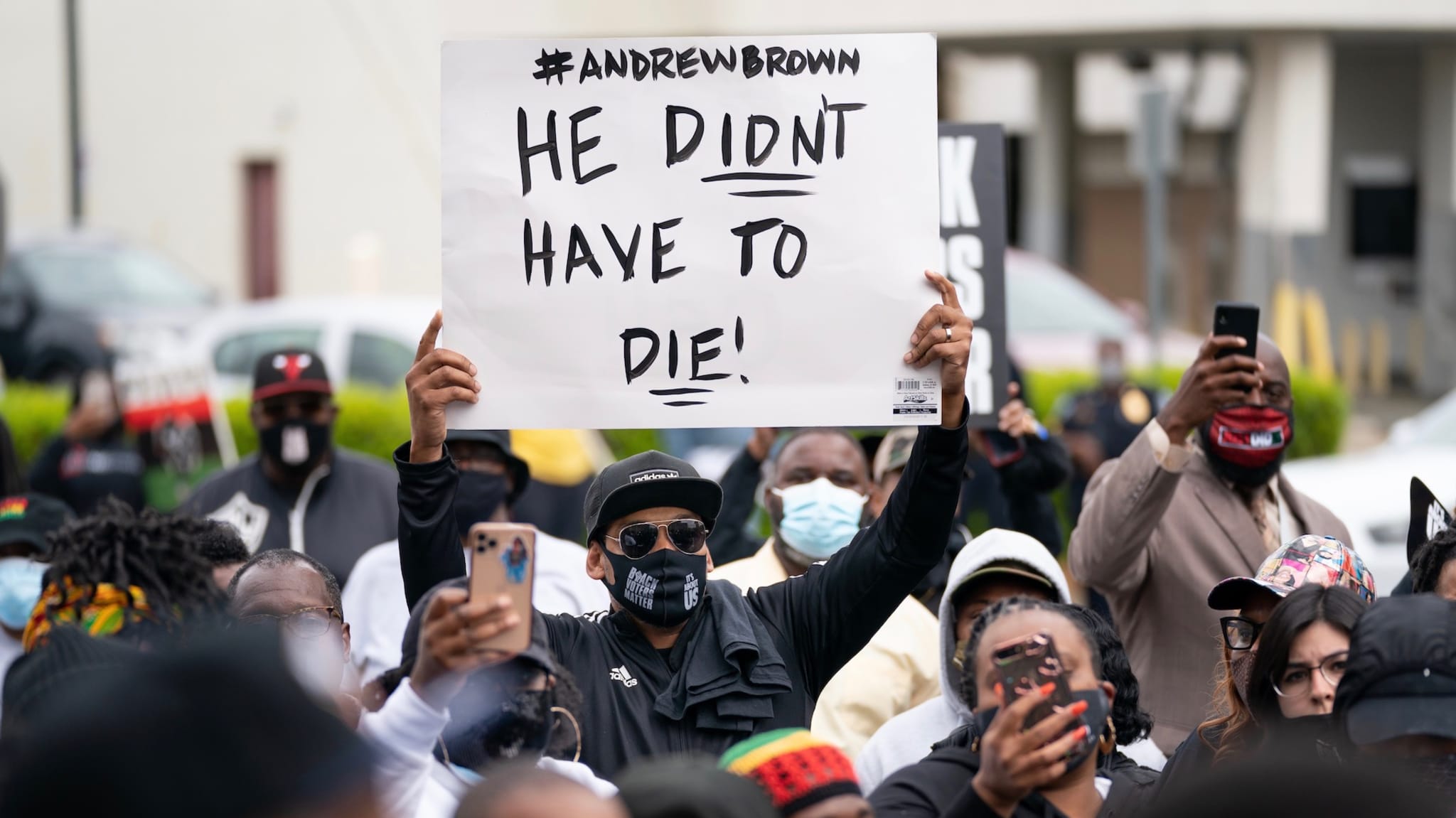
New details have emerged in the April 21 police killing of Andrew Brown Jr.
According to an updated lawsuit filed by Brown’s family, a North Carolina deputy who was involved in the killing had admitted to removing the remaining bullets from his gun after firing at least seven shots at Brown. The complaint, reviewed by ABC 11, points to a report from the North Carolina State Bureau of Investigation, which states Investigator Daniel Meads was the first to open fire on Brown while executing arrest and search warrants for drug-related crimes.
The lawsuit alleges the involved officers were aware that Brown was likely unarmed during the encounter, which is why two of the high-ranking deputies chose not to open fire as Brown drove away. Meads and his co-defendants—deputy Robert Morgan and Corp. Aaron Lewellyn—were the only officers to shot at the 42-year-old Black man, who was ultimately hit five times in the arm and once in the head.
SBI determined it was Morgan who fired the bullet that was pulled from Brown’s skull; however, Meads was the one who allegedly began “stressing out about how many times he fired his weapon at Brown’s vehicle.”
According to the complaint, Meads admitted to investigators he had altered his weapon before it was confiscated as evidence. The lawsuit states Meads failed to mention the alteration during his first interview with the SBI, and only made the admission after he learned his actions were caught on another officer’s body cam.
Per the complaint:
Pasquotank County District Attorney Andrew Womble previously announced the involved deputies were justified in the killing; however, the Brown family says the DA was fully aware of Meads’ admission but still declined to pursue criminal charges against him and the other officers.
“It was a lynching. A new-age lynching,” Brown’s aunt, Lillie Brown Clark, told ABC11. “That is absolutely disgraceful. It is disrespectful to the family, to the citizens of Elizabeth City,” said Brown Clark. “Were I not so angry, I would be very emotional.”
Brown’s family filed a $30 million civil rights lawsuit against Meads, Morgan, Lewellyn, and Sheriff Tommy S. Wotten back in July. A judge recently rejected a motion to dismiss the complaint.