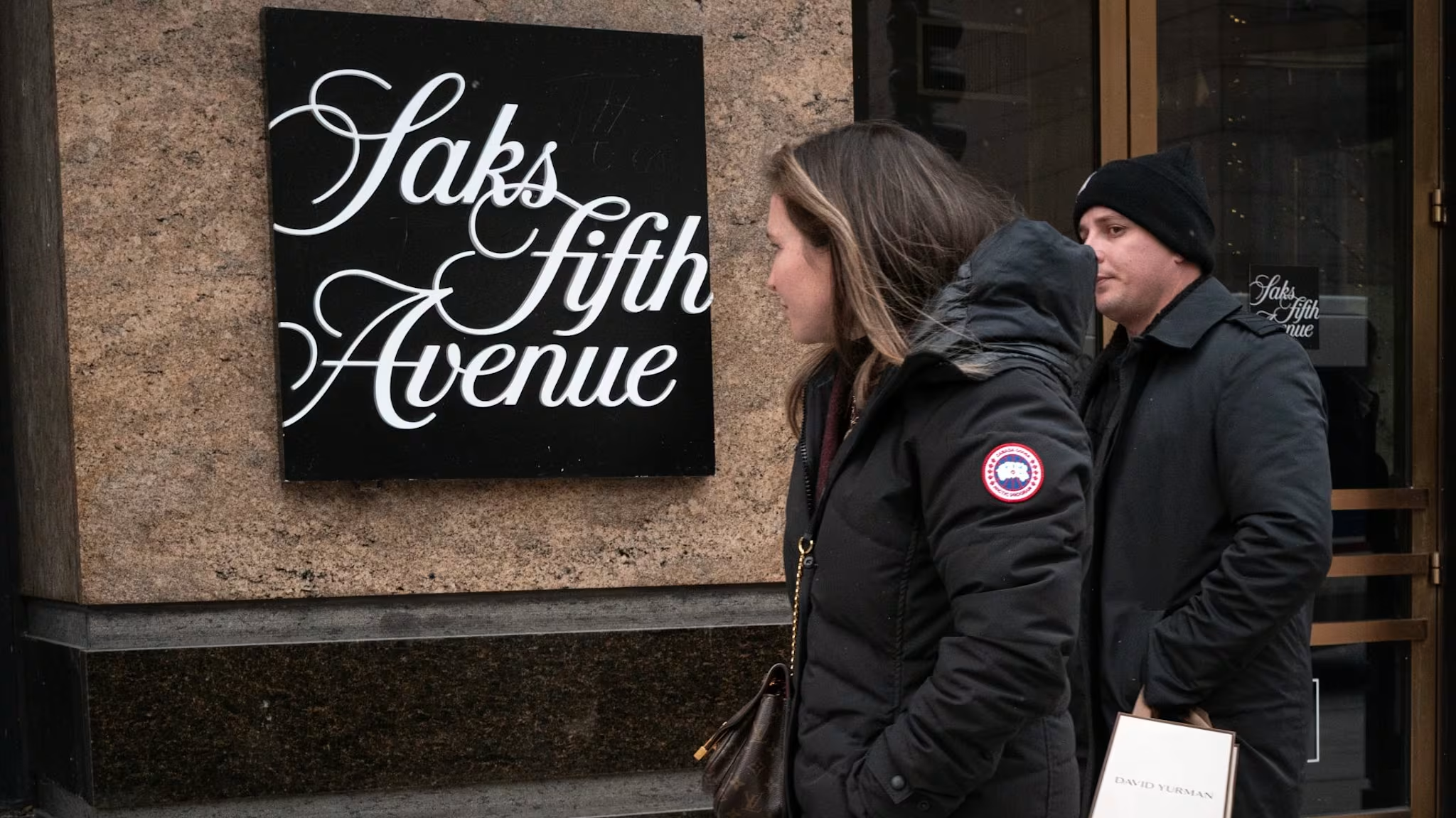
Saks Fifth Avenue's parent company is officially out of Chapter 11 bankruptcy—and it's moving forward under a completely different identity. Nearly five months after seeking court protection, Saks Global announced that it has emerged from bankruptcy as Exemplar Luxury Group (ELG), a newly restructured company that says it will focus on strengthening its portfolio of luxury retail brands while operating with dramatically less debt.
The restructuring significantly reshapes the business behind Saks Fifth Avenue, Neiman Marcus, and Bergdorf Goodman. According to Reuters, ELG has reduced its debt by nearly 75% and eliminated its previous equity structure as part of the court-supervised process. The company's new board will include representatives from investment firms Pentwater Capital Management and Bracebridge Capital, both of which played key roles during the restructuring.
Geoffroy van Raemdonck, who took over as CEO after the bankruptcy filing, will continue to lead the business alongside board members, including former Ulta Beauty CEO Dave Kimbell and former Moët Hennessy chief Philippe Schaus.
The company is also emerging with a much smaller retail footprint. ELG now operates 49 stores after closing dozens of locations during the restructuring, including 57 Saks OFF 5th stores, all five Neiman Marcus Last Call locations, 12 Saks Fifth Avenue stores, and three Neiman Marcus department stores.
At the same time, ELG confirmed it has ended its partnership with Amazon, which was established as part of the retailer's acquisition of Neiman Marcus.
When van Raemdonck stepped into the CEO role at the start of the bankruptcy process, he described the restructuring as an opportunity to rebuild the company. "This is a defining moment for Saks Global, and the path ahead presents a meaningful opportunity to strengthen the foundation of our business and position it for the future," he said at the time.
He added that the company would continue focusing on customers and luxury brand partners throughout the restructuring process.
Inventory shortages, missed vendor payments and strained relationships with major fashion houses—including Chanel, LVMH and Kering—followed.






